
The Hidden Threat Beneath Your Floors: Managing Concrete Slab Moisture for Flawless Installation
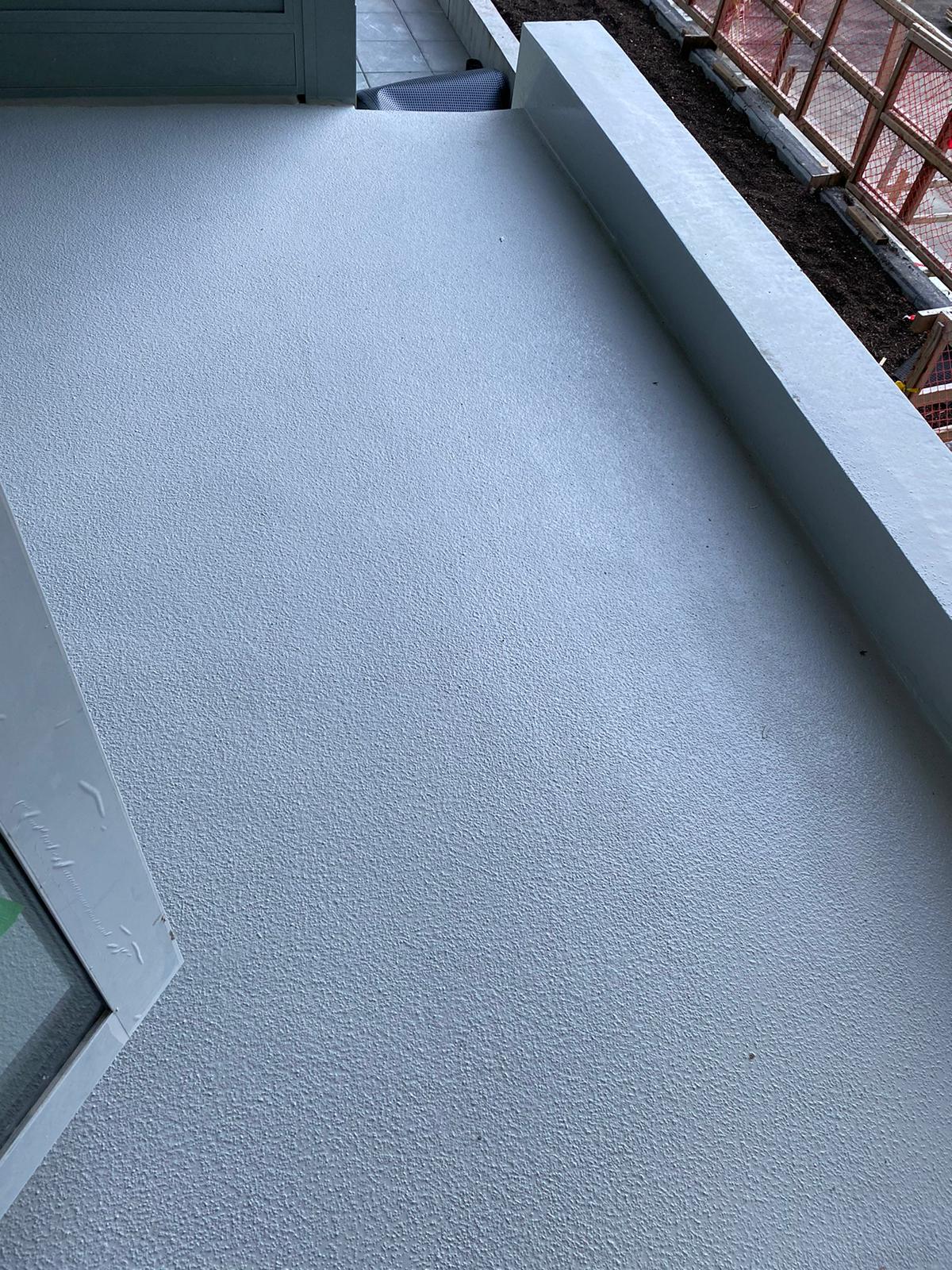
Installing high-end floor coverings—whether luxury vinyl plank (LVP), engineered hardwood, commercial carpet, or high-performance epoxy resin coatings—is often one of the final steps in a building project. However, it is also where costly failures most frequently occur. When decorative finishes warp, bubble, unbond, or emit foul odors, the underlying culprit is almost always the same: unmanaged concrete slab moisture.
Understanding how moisture behaves inside structural concrete, how it migrates over time, and how to accurately evaluate slab dryness is essential for avoiding catastrophic project delays and warranty disputes.
Key Takeaway for Project Managers: A concrete slab can feel completely dry to the touch while retaining dangerous amounts of trapped water deep inside its capillaries. Once a non-porous floor finish is installed, that trapped moisture rises to the surface, causing bond failure and floor destruction.
Why Is Concrete Full of Water? Understanding Moisture Sources
Concrete relies on water during the mixing phase to hydrate cement particles and provide sufficient workability for pouring and finishing. However, only a portion of that water is chemically bound during curing. The remaining volume—known as batching water—remains suspended in microscopic capillary channels within the concrete matrix and must evaporate for the slab to dry.
Beyond initial mixing water, sub-floor assemblies are continually exposed to external moisture sources during construction:
Subgrade Vapors: Ground moisture rising beneath ground-level slabs where vapor retarders are missing, damaged, or improperly sealed.
Weather Exposure: Unprotected slabs exposed to rain, standing water, or ambient high humidity prior to building enclosure.
Surface Wetting Operations: Liquid curing compounds, wet curing blankets, or high-pressure power washing prior to coating application.
Wet Building Materials: Moisture introduced by water-based tile mortars, leveling underlayments, and adhesive applications.
The Mechanics of Concrete Drying & Internal Redistribution
Concrete dries as water evaporates from the top surface into the surrounding air, creating a gradient where the upper layer is drier than the core. This establishes a moisture profile across the thickness of the slab.
When an impermeable or low-permeability floor covering—such as sheet vinyl, rubber backing, or dense epoxy—is placed over the slab, evaporation stops. The trapped internal water gradually redistributes upward until an equilibrium relative humidity (RH) is established beneath the new flooring. If the total moisture volume in the core was too high, this equilibrium will cause moisture accumulation directly under the finish, resulting in adhesive breakdown or severe blistering.
⚠️ Caution: Slab Thickness Triples Drying Timelines
Research proves that concrete drying times do not scale linearly with thickness. Increasing a slab from 100 mm (4 in) to 150 mm (6 in) doubles the required drying time. Increasing it to 200 mm (8 in) triples the timeline.
Common Floor Coating Failures Driven by Moisture
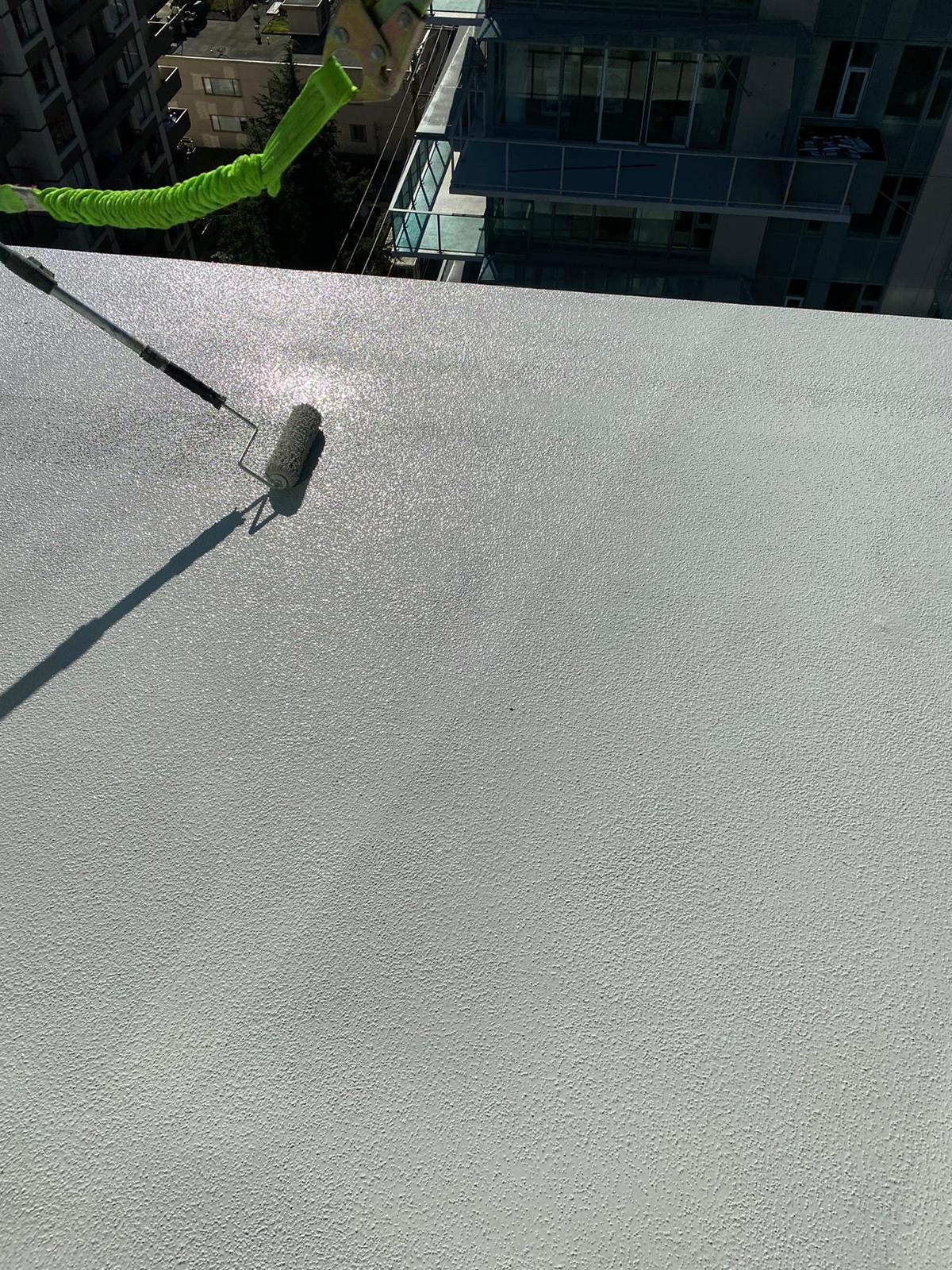
When moisture-sensitive floor systems are installed prematurely over damp concrete, several severe structural and cosmetic failures occur:
Failure Type | Primary Mechanism | Typical Floor System Affected |
Adhesive Debonding | Alkaline water dissolves water-based adhesives and breaks polymer bonds. | Sheet Vinyl, LVP, Carpet Tiles |
Osmotic Blistering | Soluble salts beneath tight coatings draw water, creating high osmotic pressure. | Epoxy, Polyurethane & Resin Coatings |
Wood Buckling & Cupping | Solid/engineered timber absorbs slab moisture, expanding beyond expansion gaps. | Hardwood Flooring, Parquetry |
Microbial Growth & Odors | Trapped liquid moisture creates a breeding ground for mold beneath backings. | Rubber-backed Carpeting, Cushion Vinyl |
How to Accurately Test Concrete Moisture Before Installation
Relying solely on visual checks or quick handheld pin-meters can lead to false confidence, as they only sample the topmost fraction of an inch.
1. In-Situ Relative Humidity (RH) Probe Testing
The industry gold standard involves drilling small test holes into the slab to measure internal moisture. Probes are sealed in place to measure the relative humidity deep within the core. A relative humidity reading of 75% RH or lower is generally required before installing moisture-sensitive materials.
2. Anhydrous Calcium Chloride Test (MVER)
This quantitative test measures the Moisture Vapor Emission Rate (MVER)—expressed in grams/m² per 24 hours or pounds of moisture emitted per 1,000 square feet over 24 hours. A standard benchmark for resilient flooring and epoxy coatings is an MVER between 3.0 and 5.0 lbs / 1,000 sq ft / 24 hrs (15 to 25 g/m²/24 h).
3. Qualitative Surface Cover Tests
Involves taping heavy plastic sheets or rubber mats to the slab for 24 to 72 hours. While not a replacement for quantitative RH testing, any visible condensation or concrete darkening beneath the sheet indicates active moisture movement that requires further investigation.
Proactive Strategies to Mitigate Concrete Slab Moisture Risks
Mix Design & Construction Practices
Optimize Water-Cement Ratio: Maintain a low w/c ratio ($\le 0.45$ or $0.50$) to minimize free evaporable water and shorten curing wait times.
Install Heavy-Duty Vapor Barriers: Place continuous, puncture-resistant membranes under ground-contact slabs.
Enclose Buildings Early: Activate HVAC systems to maintain stable ambient temperatures and relative humidity during slab drying.
Flooring Preparation Practices
Avoid Wet Cleaning Methods: Use abrasive mechanical shot-blasting or dry brush-grinding instead of high-pressure water washing.
Use High-Solid Adhesives: Select premium adhesives with at least 75% solids content for superior water resistance.
Apply Moisture Mitigation Primers: For tight schedules, apply breathable cementitious primers or 100% solids epoxy moisture barriers.
Conclusion
Preventing flooring failures is entirely about schedule awareness, proper concrete mix design, and rigorous testing protocols. By implementing deep-core relative humidity testing and respecting the physics of concrete drying, project managers and contractors can protect their projects from expensive rework and ensure long-lasting flooring performance.